Easily identify shortwave stations

For those of you who have ever been scanning shortwave radio and happened across an interesting station but have no idea what it is or where it is coming from there are a couple of phone apps that can identify what you are listening to.


These 2 apps (depending on what type of phone you have) will help listeners identify who they are listening to.. All they need to do is lookup the frequency they are receiving  and these Apps will show what stations are on air at the time. This is an easy way to identify who you are listening to.


                                                                                                                                          For Android: Click here

shortwave station identifier.

                                                                                                                           For iphone, iPad;Click here   Shortwave station identifier

Try these two apps and let us know what you think. We would also love to hear what you have found recently on Shortwave. 

Send your feedback and listening reports to hello@tecsun.com.au


Radio licence applications soars.

The ocean racing yachts that will set off on Wednesday’s Sydney Hobart Yacht Race are required to carry radio equipment that includes both VHF and HF radios.

Perpetual LOYAL competes in the 2014 Sydney Hobart Yacht Race
Image courtesy of Michael Cratt
Read more

Tecsun Radios Australia has set up a Software defined radio (receiver) in Araluen, a small rural community in NSW, Australia. It’s a quiet location for radio “noise”, far away from high density population and the accompanying RF noise generated.

You can listen to the Tecsun Radios Australia SDR here.

The SDR itself is called a “KiwiSDR” and is a commercially available unit, costing around $500. The Kiwi SDR compared to others has 2 advantages: (1) it allows the user to observe the entire shortwave spectrum in one screen, and (2) it can easily be connected to the internet to allow remote operation.

Other SDRs only receive a narrow portion of the radio spectrum, and require extra equipment to connect to the internet.

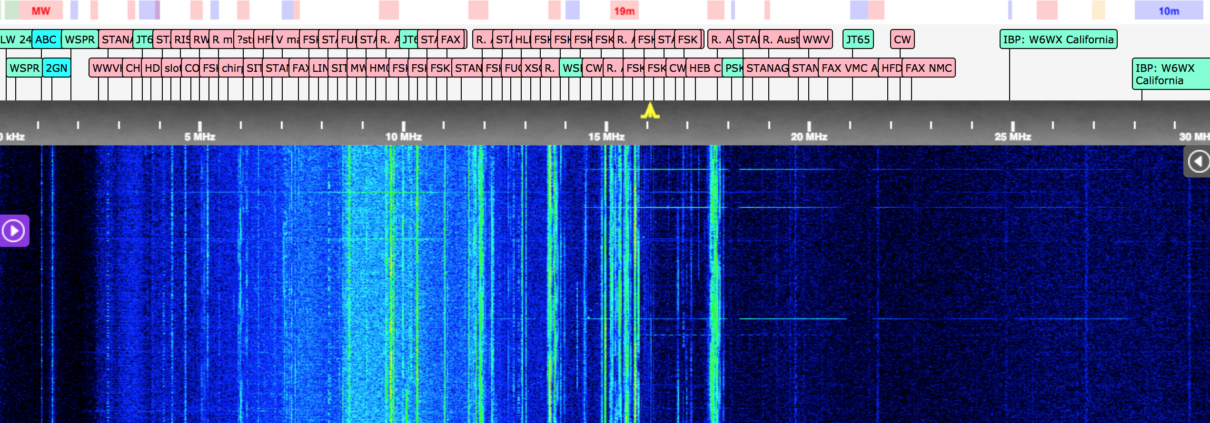
With the Kiwi SDR, it is easy to remotely identify that a signal exists from the “waterfall” display and then accurately tune and receive it.

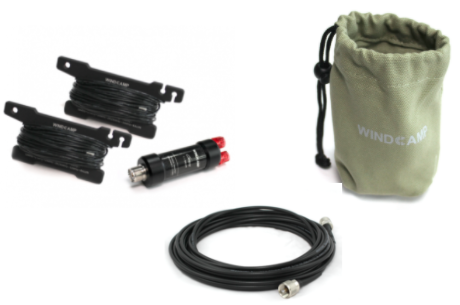
The SDR is connected to two separate trapped HF vertical antennas. Each antenna is fed via common mode chokes ,one at the antenna end, and one at the equipment end of each cable run. These 2 antennas are then fed to an HF signal combiner. This provides some degree of antenna redundancy. The HF combiner feeds a 1:1 50 ohm transformer to isolate the KiwiSDR power supply ground from the antenna ground.

The antennas have been located as far away from man made noise sources as possible, and are fed with 75 ohm quad shield cable. Careful attention has also been paid to the grounding of the antenna.

Because the location is remote and in a bushfire affected area, mains power is supplemented by battery backup. The 5 volt power supply required by the KiwiSDR is a linear power supply that  has a built in switching delay of 0.5 seconds, to ensure stable reset after power failure. We have been unable to surce a UPS with low RFI footprint for this application.

Connectivity to the www is achieved via a Skylink Ka band satellite link.

The Kiwi SDR can be used to receive AM, AM Narrow, USB, LSB, weatherfax, CW (Morse Code) and DRM signals.
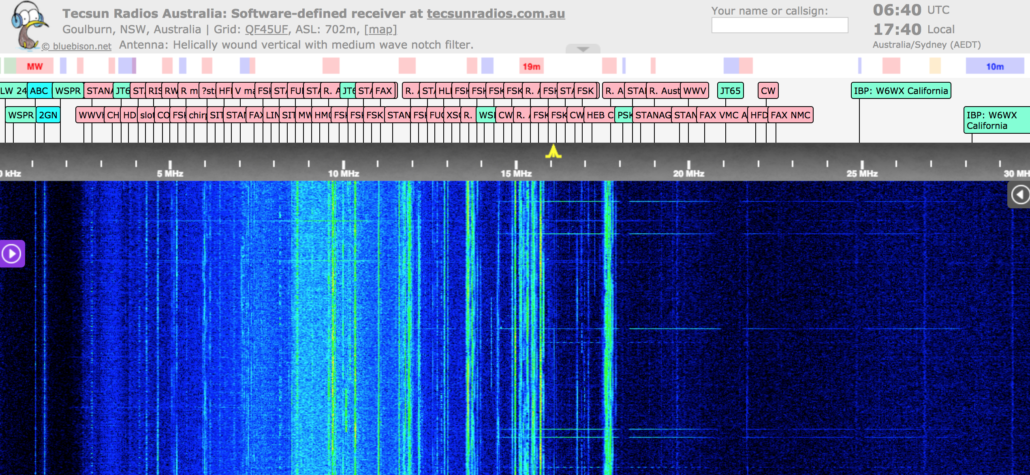
The Tecsun Radios SDR ‘waterfall’

You can listen to the Tecsun Radios Australia SDR here.

Or, simply logon to the SDR (go to http://kiwisdr.com/public/ for a worldwide list), select an SDR located close to the transmission source you’d like to listen to, select the appropriate mode and the desired frequency.

Have you tuned into the Tecsun Radios SDR?
Tell us in the comments below where you’re tuning in from and what you listened to!


At Tecsun Radios Australia, we’re a bunch of amateur radio enthusiasts ourselves, and AMSAT’s satellite launch on December 4 (Australian time) “Fox1 Cliff” has inspired us to join forces with the volunteers at AMSAT who build and launch Amateur Radio Satellites.

Read more

This morning’s launch of a SpaceX Falcon 9 rocket from Launch Complex 39A of Florida’s Kennedy Space Centre, carried a payload designed to boost communications for the amateur radio operators among us!

Read more

Shortwave Radiogram transmits digital text and images on shortwave using a standard analogue shortwave transmitter. These signals can be received and decoded using a simple AM shortwave radio and either a computer or Android phone using free decoding software.

Read more

Natural Disaster is often unpredictable, yet life threatening and devastating. Papua New Guinea (PNG), Tonga and Vanautu, have all experienced trauma through natural disasters this year. Papua New Guinea experienced a 7.5 magnitude earthquake and Tonga and Vanuatu enduring cyclones, Cyclone Gita and Hola respectively. It is crucial during times like these that there is […]